


How to Store Fresh Artisan Bread After It's Delivered to Your Door
There is a particular kind of disappointment that happens with freshly delivered bread. You open the box, the smell hits you immediately, warm and yeasty and completely right, and you think this is going to be a good week.
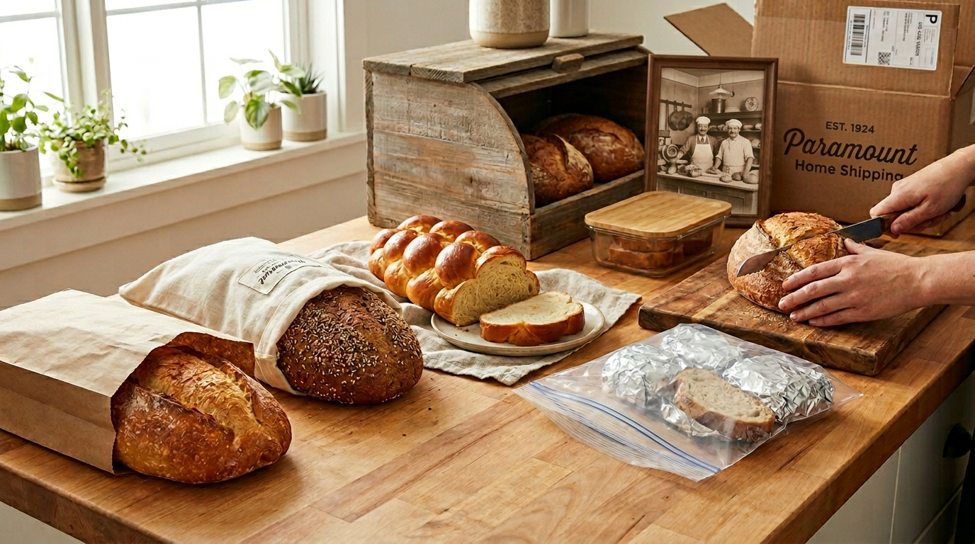
Then Tuesday arrives and the loaf is already going stale because it got stuffed in a plastic bag and tucked in the fridge on Monday evening. The bread was worth ordering. The storage was not worth the bread.
Getting this right is simpler than most people expect. Artisan bread does not need complicated handling. It just needs handling that matches what it actually is: a perishable product made without the preservatives that commercial bread relies on to survive a week on a shelf. Once you understand that, the right bread storage tips follow naturally.
Bread and bakery products account for 12% of all edible food wasted at the household level, making it one of the most consistently wasted food categories in the home. The average American spent over $760 on food that went uneaten in 2024, a figure that includes the artisan loaves ordered with good intentions and then mishandled into the bin. Also, 55% of wasted bread is discarded through general waste rather than being composted, repurposed, or frozen, which means most of it goes straight to landfill when a few straightforward choices could have saved it. Most bread waste is not an inevitable outcome. It is the result of storage habits that were designed for a different kind of bread.
Why Artisan Bread Is Different From What Most Storage Advice Covers
Commercial sandwich bread and artisan bread are two different products, and the advice that applies to one does not apply to the other. Commercial bread is engineered for shelf life. It contains calcium propionate, emulsifiers, and dough conditioners that slow the staling process and resist mold for up to two weeks. When you store it in plastic at room temperature, those additives are doing most of the work.
Artisan bread contains none of that. A proper Italian loaf, a well made rye, or a freshly baked challah is built from flour, water, yeast, salt, and sometimes olive oil or eggs. The shelf life is naturally shorter because nothing artificial is extending it, and the bread behaves very differently when sealed, refrigerated, or exposed to moisture.
Understanding bread freshness in the context of artisan baking helps clarify what you are actually working with. The goal is not to replicate the indefinite life of a preservative-laden commercial loaf. It is to keep a naturally perishable product at its best for the days you have it, and to extend that window intelligently through freezing when needed.
The Most Common Storage Mistake
The fridge. Almost everyone's instinct is to refrigerate bread they want to keep longer, and with artisan bread this is the one approach that reliably makes things worse rather than better.
Bread stales through a process called retrogradation, in which the starch molecules in the crumb recrystallize and firm up as they cool. This process happens fastest at temperatures just above freezing, which is exactly where a refrigerator operates. A loaf that would stay genuinely good for two days at room temperature may be noticeably stale within twelve hours in the fridge. The crumb firms up, the crust goes soft from moisture cycling, and the flavor becomes flat in a way that is hard to reverse.
The only situation where refrigeration makes sense for artisan bread is if your kitchen is very warm and humid and mold is a real concern. In a standard home environment, room temperature storage is almost always the better option for the first two to three days.
How to Store Fresh Bread by Type
Different breads within the artisan family ask for slightly different treatment. Knowing the full landscape of types of bread you might be working with helps you match the storage approach to the specific loaf rather than applying one rule across all of them.
Crusty Italian Loaves and Sesame Rolls
Italian breads are loaves where the crust is half the appeal. Panella, long Italian rolls, and sesame seeded rounds should be stored in a paper bag or a cloth bread bag at room temperature. Never plastic. Plastic traps moisture against the crust and softens it within hours. Paper breathes, allowing residual steam to dissipate while still protecting the exterior from drying out too quickly.
If you will not finish the loaf within two days, slice what you need for those days and freeze the rest. Italian bread freezes exceptionally well and returns from the freezer close to its original quality when warmed briefly in a low oven rather than a microwave.
Rye and Dense Fermented Loaves
Rye bread benefits from the natural acidity produced during fermentation, which gives it a degree of resistance to mold that lighter breads do not have. Stored in a cloth bag or a bread box at room temperature, most rye varieties stay good for three to five days. The flavor often deepens slightly on the second day as the fermentation compounds settle, which makes day old rye particularly good for substantial sandwiches.
Whether you are using it for Rye Bread Sandwiches throughout the week or slicing as needed, room temperature in breathable packaging is the right call. There is no need to rush rye into the freezer unless you genuinely will not reach it within five days.
Enriched Loaves like Challah
Challah and other egg enriched breads have a higher fat content that slows staling naturally. They stay pleasantly soft for two days at room temperature, wrapped loosely in a cloth bag or a clean kitchen towel. After that window, challah that has firmed slightly is actually better for French toast and bread pudding than fresh challah, because the drier crumb absorbs egg custard more evenly without falling apart in the pan.
Bread Storage by Type: A Quick Reference
Bread Type | Recommended Storage | Room Temperature Life | Freezer Friendly |
Italian panella and sesame rolls | Paper bag at room temperature | 1 to 2 days | Yes, up to 3 months |
Long Italian loaves | Paper bag at room temperature | 1 to 2 days | Yes, sliced or whole |
Rye and pumpernickel | Cloth bag or bread box | 3 to 5 days | Yes, up to 3 months |
Challah | Cloth bag or kitchen towel | 2 days | Yes, best sliced |
Sourdough | Paper bag or bread box | 3 to 4 days | Yes, up to 3 months |
All artisan varieties | Refrigerator | Not recommended | Freezer preferred |
How to Freeze Artisan Bread Without Losing Quality
Freezing is the most reliable of all homemade bread storage solutions for anything you will not use within the natural shelf life of the loaf. The key is doing it correctly.
Allow the bread to cool completely before freezing. Slice it first wherever possible so you can pull individual pieces without thawing the entire loaf. Wrap the slices or portions tightly in foil, then place them in a freezer bag to protect against freezer burn. Label with the date so you know what you have.
To use from frozen:
● Place slices directly in the toaster from frozen for the quickest result
● Thaw at room temperature for fifteen to twenty minutes for a full slice or portion
● Reheat larger pieces in a low oven for ten to fifteen minutes to restore crust structure
The one rule worth remembering is not to refreeze bread after it has been thawed. The texture deteriorates noticeably the second time around, and the flavor follows. Slice before freezing and you will never need to refreeze.
Making the Most of Bread That Is Past Its Peak
Knowing how to keep bread fresh longer is one half of the picture. The other half is knowing how to use bread confidently once it has moved past its ideal window. Good bread storage is partly about preservation and partly about perspective.
Bread that has firmed up is genuinely better for certain applications. Italian bread that is a day old slices more cleanly for bruschetta and holds toppings without going soggy under them. Rye from the day before absorbs dressing in an open face sandwich at the right rate rather than too fast. Challah that has dried slightly produces French toast with a custardy interior that fresh challah cannot match because the crumb absorbs the egg mixture more evenly.
On occasions like National Sandwich Day, the best sandwich is rarely about the freshest bread. It is about the right bread handled thoughtfully from delivery to plate.
How We Think About It
Every loaf that leaves Paramount Bakeries Home Shipping is baked on Monday morning and packed in breathable kraft paper the same day. That packaging choice is deliberate: it gives the crust the best possible chance of arriving intact, and it sets the loaf up for the two to three days of room temperature life that follows.
What happens after delivery is the second half of a process that Paramount Bakeries Home Shipping put a lot of thought into on the first half. Store it in paper. Keep it at room temperature. Freeze what you will not use in the first two days. And treat day old bread as a different version of the loaf rather than a lesser one. It was baked with care, and a little attention on your end is all it takes to honor that.
FAQs
1. Should artisan bread be stored in plastic or paper? Paper is always the better choice because it allows moisture to escape rather than trapping it against the crust, which plastic does and which causes crust softening and early staling.
2. How long does freshly delivered artisan bread stay good at room temperature? Most artisan loaves stay at their best for two to three days at room temperature in breathable packaging, with denser rye varieties lasting up to five days.
3. Does freezing affect the quality of artisan bread? Artisan bread freezes very well when sliced and wrapped properly before freezing, and warms back to close to its original quality in a low oven or toaster.
4. Why does refrigerating bread make it go stale faster? Refrigerator temperatures sit in the range where the starch recrystallization process that causes staling happens at its fastest rate, so the fridge speeds up staling rather than slowing it down.


Comments